GoPro just did something it has resisted for over a decade: it adopted an open standard. The company's new Mission series cameras, announced today, feature a native Micro Four Thirds mount, abandoning the proprietary mounting system that has defined GoPro hardware since the beginning.
Why This Matters
The Micro Four Thirds mount is a lens standard developed jointly by Olympus and Panasonic back in 2008. It's become the backbone of compact cinema cameras, drones, and professional video rigs. By adopting it, GoPro is signaling that the Mission series isn't competing with your phone's action cam mode. It's going after RED Komodos, Blackmagic Pocket Cinemas, and the DJI Ronin 4D.
The move makes sense when you look at where GoPro has been struggling. The consumer action cam market is saturated. Chinese competitors like Insta360 and DJI have eaten into GoPro's market share with cameras that match or exceed Hero performance at lower price points. Meanwhile, GoPro's attempts to expand into drones and 360-degree cameras have produced mixed results.
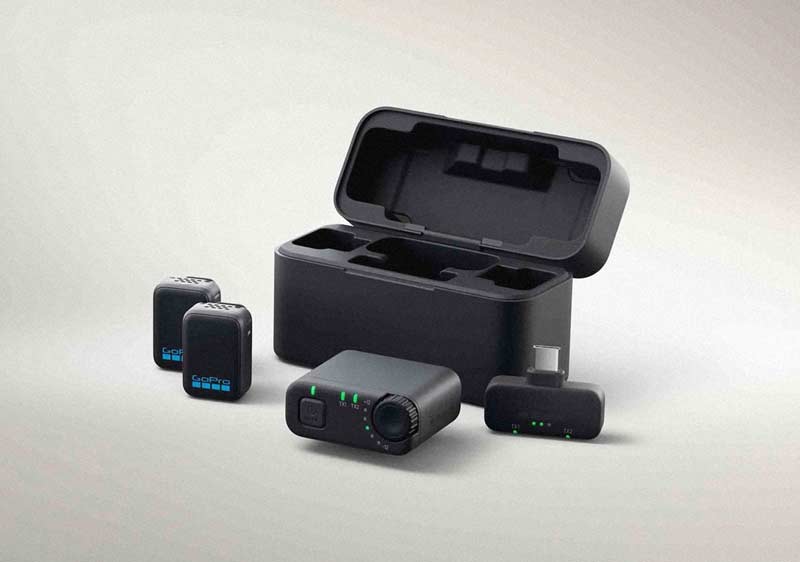
The Mission series represents a different strategy: move upmarket, embrace interoperability, and bet on professional creators who need modular systems.
What We Know About the Hardware
GoPro is being characteristically tight-lipped about full specifications, but the announcement confirms several key details. The Mission cameras will ship with a standard MFT mount, allowing users to attach lenses from Panasonic, Olympus, Sigma, and dozens of other manufacturers. The sensor size hasn't been confirmed, but an MFT mount strongly suggests an MFT sensor to match.
That would represent a substantial upgrade from the 1/1.9-inch sensor in the current Hero 13 Black. An MFT sensor offers roughly four times the surface area, which translates directly into better low-light performance, shallower depth of field, and more latitude in post-production color grading.
The body design appears to maintain GoPro's signature compact form factor, though necessarily larger to accommodate the mount and presumably improved cooling for extended recording sessions. Professional video work generates substantial heat, and thermal throttling has been a persistent complaint about compact cinema cameras across the industry.
The Ecosystem Play
What's interesting here is that GoPro isn't just releasing a camera. It's inserting itself into an existing ecosystem of lenses, rigs, monitors, and accessories that professionals already own. A cinematographer with a bag full of MFT glass can now consider a GoPro for crash cams, drone shots, or gimbal work without buying into a completely separate system.
This is the opposite of GoPro's historical approach, which locked users into proprietary mounts, proprietary batteries, and proprietary accessories. The margins on those accessories were presumably healthy, but they also created friction for professionals who wanted to integrate GoPro footage into larger productions.
The announcement comes as high-resolution cinema workflows continue to demand more from compact cameras. Productions increasingly shoot with multiple camera types, mixing full-frame cinema cameras for hero shots with smaller units for specialty angles. Having those smaller cameras speak the same optical language simplifies everything from lens logistics to color matching in post.
Questions Remain
GoPro hasn't announced pricing, and that will determine whether the Mission series finds its audience. Professional cinema cameras occupy a wide price band, from the $1,300 Blackmagic Pocket Cinema Camera to the $6,000 RED Komodo. Where GoPro positions itself will signal how serious the company is about this market.
Recording formats and codec options also remain unclear. Professional workflows demand ProRes or Blackmagic RAW. Anything less and the Mission series becomes a hard sell to working cinematographers regardless of image quality.
The shift toward professional tools reflects a broader recognition that the consumer action cam market may have peaked. GoPro built its brand on extreme sports and adventure content. The Mission series suggests the company sees its future in sound stages and film sets as much as mountain bikes and surfboards.