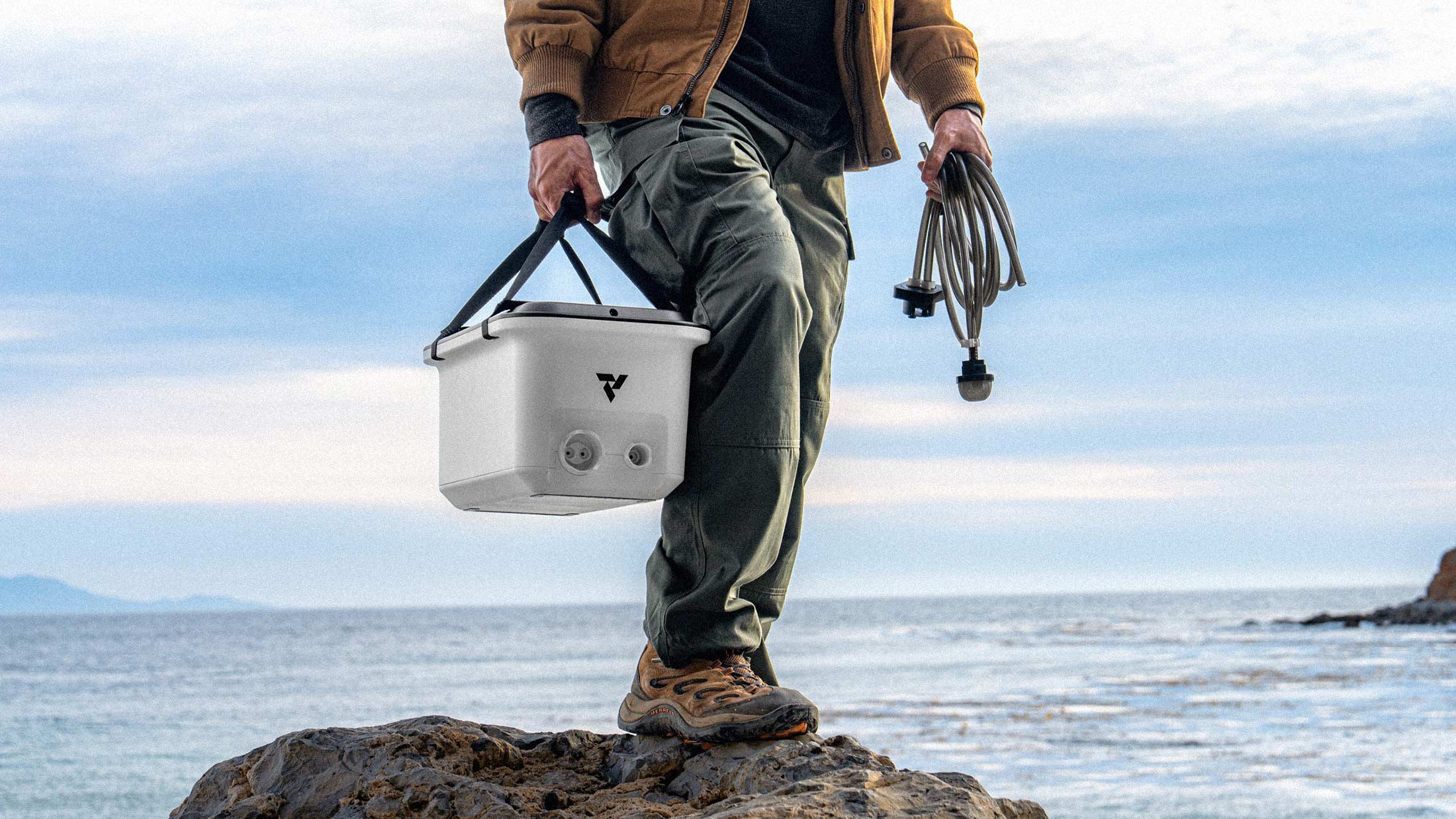
Images and specifications allegedly belonging to an unannounced Jackery product called the FridgeGuard surfaced online this week, suggesting the portable power company is developing a dedicated backup system for refrigerators. The leak, first reported by CleanTechnica, describes a slim unit designed to keep fridges running during outages without requiring a whole-home battery or generator.
What the Leak Claims
According to the report, the FridgeGuard would mount behind or beside a refrigerator and provide enough capacity to keep food cold for extended periods during grid failures. The design reportedly prioritizes a low profile to avoid cluttering kitchens. Specifications remain unconfirmed, and Jackery has not acknowledged the product's existence. Everything here should be treated as speculation until an official announcement.
If legitimate, the product would represent a departure from Jackery's core lineup of portable power stations and solar generators. Rather than offering a single large battery for multiple uses, the FridgeGuard would embed backup power directly into a specific appliance's workflow.
The Case for Appliance-Level Storage
The concept of distributing battery capacity across individual appliances rather than centralizing it in one home unit is gaining traction. Impulse Labs, a startup building induction cooktops with integrated batteries, has been vocal about this approach. Founder Sam D'Amico has argued that pairing large battery banks with specific appliances solves multiple problems at once. The appliance gets instant power for high-demand tasks, and the home gains a distributed reserve that can feed back into the electrical system when needed.
This philosophy challenges the dominant model in residential energy storage, where companies like Tesla and Enphase sell wall-mounted units sized to back up entire homes. Those systems work, but they require significant upfront investment and professional installation. They also create a single point of failure.
Distributed storage spreads both the cost and the risk. A kitchen with a battery-equipped cooktop and a FridgeGuard-style backup would have two independent reserves. Neither needs to be massive because each handles only its own load. The math changes.
Who Might Follow
Jackery and competitors like Anker have built substantial businesses selling portable batteries to campers, remote workers, and emergency preppers. Moving that expertise into fixed-appliance backup feels like a natural extension. The FridgeGuard leak, if accurate, could indicate that these companies see residential energy resilience as a growth market worth entering.
The timing aligns with broader shifts in how people think about grid reliability. Massive energy demand from AI data centers is straining infrastructure. Extreme weather events are becoming more frequent. Homeowners are increasingly interested in solutions that don't require rewiring their entire house.
Whether the FridgeGuard materializes as described remains uncertain. But the underlying idea, that battery storage belongs next to the loads it serves rather than in a closet somewhere, appears to be gaining momentum. Improvements in battery recycling and falling cell costs make this approach more viable each year.
For now, the FridgeGuard exists only as a rumor. The concept it represents does not.